How to Spot Cheap Cabinet Doors
When upgrading your cabinets, it can be overwhelming. The most important part of cabinetry are the doors. At first glance, many cabinet doors look nearly identical. They may have the same style, color, and finish, but what’s underneath and how they are constructed can make a significant difference in how they look and perform over time.
A quality cabinet door should do more than look good on installation day. It should withstand years of daily use, resist warping, maintain its finish, and continue operating smoothly.
Whether you’re planning a kitchen remodel or considering cabinet refacing, understanding the difference between inexpensive, mass-produced doors and high-quality craftsmanship can help you make a smarter investment.
Not All Cabinet Doors Are Built the Same
Cabinet doors vary widely in quality.
Some manufacturers prioritize low cost and fast production, while others focus on craftsmanship, durable materials, and long-term performance (hint; that’s us!).
Although inexpensive doors may save money upfront, they can develop problems such as peeling finishes, loose joints, warping, or visible wear much sooner than well-built doors. From being in this business for so long and seeing so many cabinets, we can testify that just because a cabinet looks good, an inferior door, paint job or finish can fall apart amazingly fast. Sometimes requiring replacement or repair even within a single year of regular use.
When comparing cabinet doors, it’s important to look beyond the color and style.
1. Look at the Materials
The material used to build a cabinet door has a major impact on its durability and appearance.
Quality cabinet doors often feature:
- Solid hardwood frames
- Look closely at the wood grain used in the frame. Straight, consistent grain contributes to greater stability and help reduce unwanted movement in the wood. Quality manufacturers are selective about the wood they use rather than simply choosing the least expensive material available.
- Stable core materials designed to resist movement
- Wood is a natural material that can expand and contract as temperature and humidity change. Selecting quality materials and using the appropriate portions of the wood helps create a stronger, more stable cabinet door. At Refaceful, we focus on building doors for durability—not simply finding the cheapest way to manufacture them.
- Wider frame sizes/Rails and Stiles
- A The horizontal and vertical pieces surrounding the center panel are known as rails and stiles. Their dimensions matter. Narrower frames may reduce manufacturing costs, but a more substantial frame can provide greater strength and stability. This is an important detail that homeowners may not notice when comparing cabinet doors based on appearance or price alone.
- Premium veneers or professionally applied painted finishes
- The exterior finish is another important indication of quality. Premium veneers should be carefully selected and applied, while painted doors should have a smooth, consistent, professionally finished surface. Proper preparation and finishing help create the clean appearance homeowners expect from new cabinetry.
Lower-quality doors may use lightweight materials that are more susceptible to swelling, chipping, or damage from everyday use.
Because we manufacture our doors locally and within our own factory, we can ensure the quality of every door we install.
2. Examine the Door Construction
The way a cabinet door is assembled is just as important as the material itself.
High-quality doors are carefully built with strong joinery that keeps the frame stable through years of opening and closing.
Look for:
- Tight, consistent joints
- Well-fitted joints help create a strong, stable cabinet door.
- Clean corners
- Corners should meet precisely without noticeable gaps or uneven seams.
- Solid construction
- The door should feel substantial and well-built, not flimsy or loosely assembled.
- Smooth, even edges
- Consistent edges contribute to a professional appearance and a higher-quality finished product.
- Precision craftsmanship
- From the initial construction to the final finish, attention to detail makes a noticeable difference. Poorly made doors may have uneven gaps, rough edges, visible imperfections, or joints that loosen over time.
3. Inspect the Finish
A cabinet’s finish protects the door while giving it its color and beauty.
Quality finishes should appear:
- Smooth
- Even
- Consistent
- Free of drips or rough spots
- Uniform across every door
Inferior finishes may begin to chip, peel, discolor, or wear prematurely especially around handles and frequently used areas.
Professional finishing processes help create a more durable surface that stands up to daily use.
4. Feel the Weight
While heavier isn’t always better, extremely lightweight cabinet doors can sometimes indicate thinner materials or lower-quality construction.
A well-built cabinet door should feel solid and substantial without being overly heavy. Quality construction often provides a reassuring feel when opening and closing the door.
5. Check for Warping
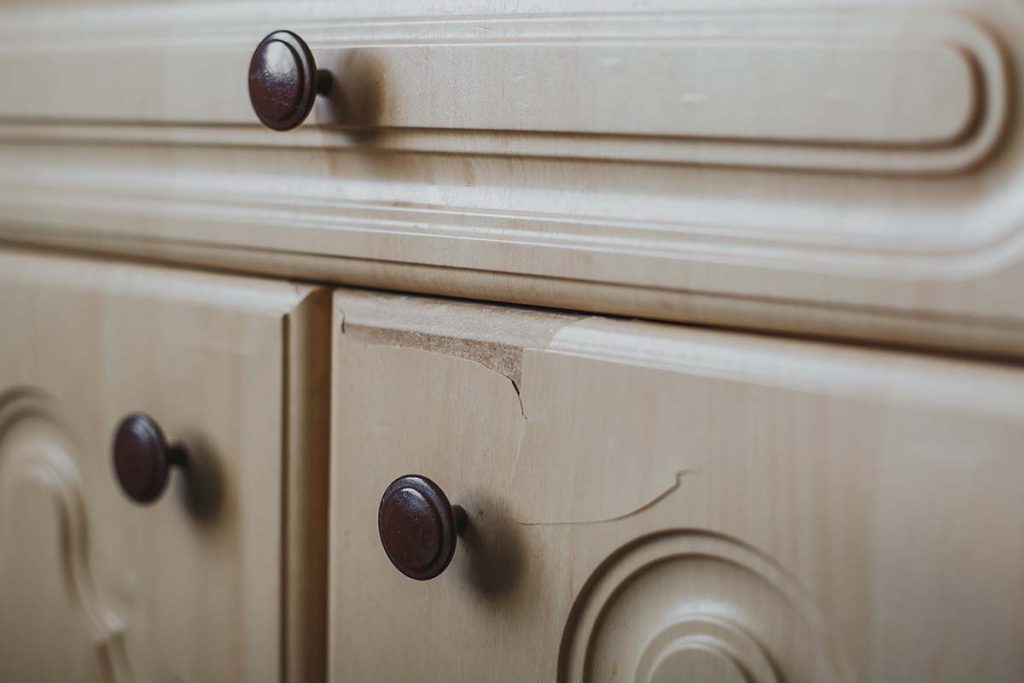
Rigid Thermofoil (RTF) cabinet doors are made by applying a vinyl material over a fiberboard core using heat and vacuum pressure. RTF can provide an affordable, uniform-looking finish, but it can also be more vulnerable to heat, moisture, and everyday wear than some other cabinet door materials.
This is especially important in the kitchen, where cabinets are routinely exposed to steam, water, heat, and changing temperatures. Areas around ovens, dishwashers, sinks, and other appliances may be particularly susceptible to damage.
Over time, RTF cabinet doors may develop:
- Delamination
- The vinyl covering can begin separating from the fiberboard underneath.
- Peeling
- Edges and corners may start lifting or peeling away from the door.
- Warping
- Exposure to heat or moisture can affect the shape and appearance of the door.
Unlike real wood, damaged RTF is impossible to repair or refinish. Once the exterior material begins peeling, separating, or warping, the doors will need to be replaced.
6. Pay Attention to Hardware Compatibility
Even the best cabinet door benefits from quality hardware. When the door and hardware are made poorly, the hardware can loosen. This results in rattling and hinge failure.
Soft-close hinges, properly drilled mounting locations, and precise installation all contribute to long-term performance.
When doors are manufactured with precision, they align more accurately and operate more smoothly.
7. Ask Where the Doors Are Made
One question many homeowners overlook is:
Where are these cabinet doors manufactured?
Mass-produced doors are often shipped long distances and manufactured in high-volume facilities focused primarily on production speed.
Locally manufactured doors like ours provide several advantages:
- Greater quality control
- Better craftsmanship
- Faster turnaround times
- Easier communication
- Support for local businesses
Knowing who builds your cabinets and where they’re built can give you greater confidence in the finished product.
Invest in Quality That Lasts
Cabinet doors are one of the most visible and frequently used features in your kitchen. Choosing quality materials and expert craftsmanship can make the difference between cabinets that look worn after a few years and cabinets that continue looking beautiful for decades.
When you choose cabinet refacing from Refaceful, you’re investing in locally manufactured craftsmanship, premium materials, and a finished product built with long-term durability in mind. Instead of settling for inexpensive, mass-produced doors, you can enjoy a kitchen that’s designed to look great, function beautifully, and stand the test of time.
If you’re ready to upgrade your kitchen with high-quality cabinet doors made right here in Nevada, contact Refaceful to schedule your consultation and explore the many styles, finishes, and customization options available.